
Article at a Glance
Why should brands rethink their YouTube strategy for 2027?
YouTube now captures 15.8% of all watch time on TV screens. It’s not only dominating phones, tablets, and computer screens anymore. And the surge has been driven heavily by adults 50 and older, which means brands need to optimize their video creative for people sitting 10 feet away from the screen, separate their TV ad buying from campaigns they’re running on mobile, and begin treating their brand channels more like prime-time TV networks.
I was speaking with a class at Temple University, and one of the topics of our discussion was where most people are consuming media today.
It wasn’t surprising that the answer was YouTube. But what was surprising to many in the room was where that viewing is actually happening.
When most marketers hear "YouTube," their minds go straight to a phone or iPad. But the data tells a completely different story: YouTube is dominating traditional living-room TV sets.
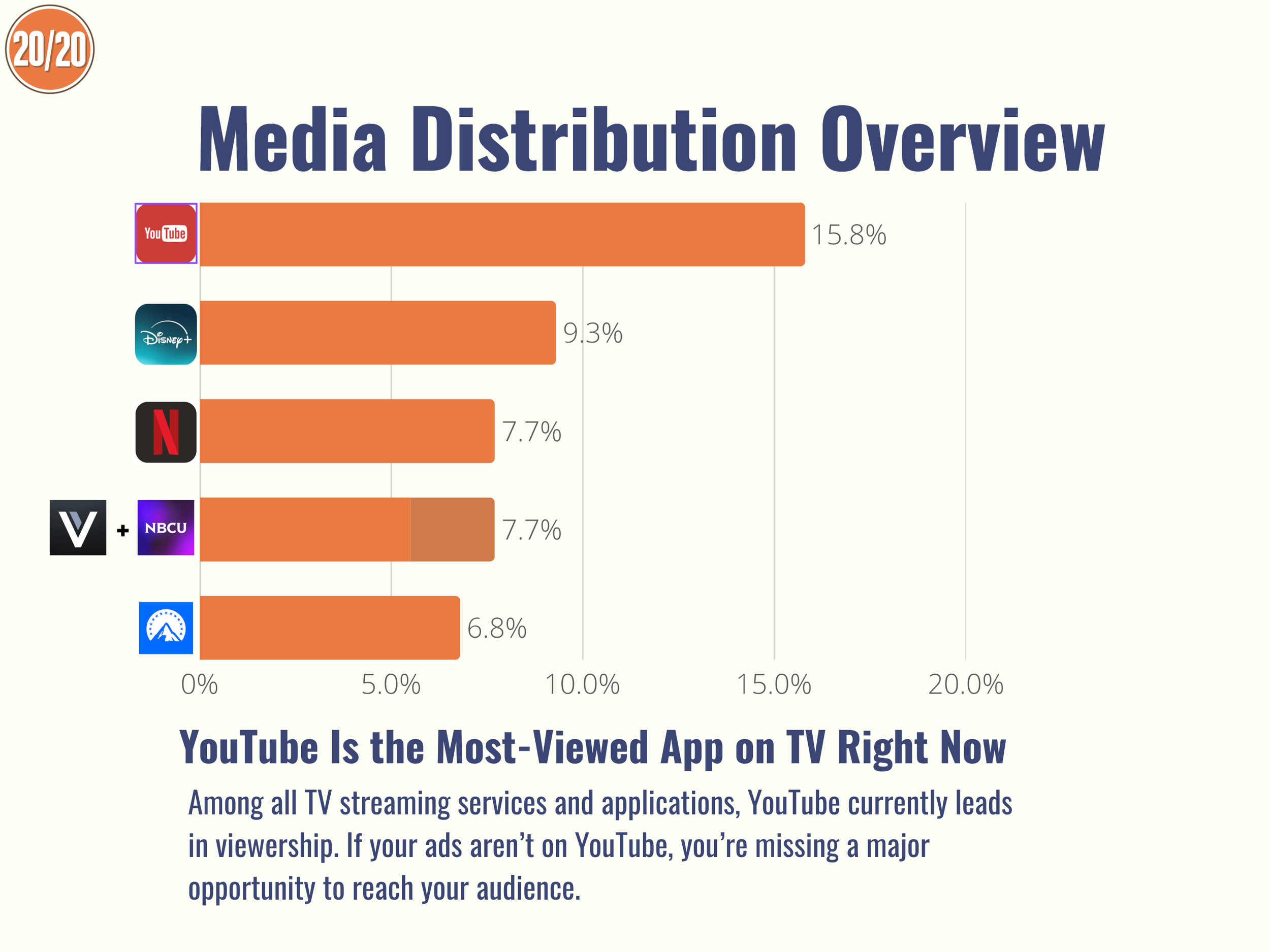
According to Nielsen’s August 2026 The Gauge report, YouTube accounts for 15.8% of all TV watch time in the United States. Not phone. Not tablet. Not laptop. TV.
And that number doesn’t even include YouTube TV. It’s strictly the YouTube app. That gives YouTube a larger share of U.S. TV screen viewing than Netflix (7.7%), Disney, Paramount+, or any other media distributor in the country, capturing more than double the watch time of any other standalone streaming platform.
On top of that, industry estimates show that more than half of all U.S. YouTube watch time now happens on living-room TV screens.
For brands mapping out their 2027 marketing budgets, this shift changes everything. If you aren't putting your products and services in front of where audiences are actually watching, you're already behind.
Here is what YouTube’s living-room takeover means for your strategy—and how to adapt your playbook going into 2027.
1. Stop Treating YouTube Like a Youth-Only Social Channel
One of the biggest blind spots in media planning is assuming YouTube is strictly a Gen Z and Millennial platform. While younger viewers certainly built it, older demographics are driving its current TV surge.
In the same Nielsen report where overall U.S. TV usage dipped 4.4%, YouTube’s TV viewing actually grew 6%. That growth was fueled in large part by a 9% jump among adults aged 50 and older.
Gen X and Baby Boomers are increasingly turning on their smart TV and opening YouTube by default instead of channel surfing on cable.
2. Build Creative for Bigger Screen Experience
You can’t simply take a vertical video built for a six-inch phone screen, drop it onto a 65-inch living-room TV, and expect it to perform. Living-room viewing is much more of a sit back with the sound-on kind of experience, and your creative needs to match the screen it’s being viewed on.
When producing or adapting video assets for YouTube on TV:
Prioritize 16:9 horizontal framing: While YouTube Shorts do run on TV screens, flagship Connected TV (CTV) placements, including the paid 30-second non-skippable ads require crisp, high-resolution horizontal video.
Design for distance: Keep text overlays large, high-contrast, and uncluttered so they can be read easily from 10 feet away on a couch.
Rethink your call to action: Nobody clicks a hyperlink with a TV remote. Instead of baking static QR codes into your video files (which look awkward on mobile), use Google Ads’ native CTV QR codes and "Send to phone" prompts. They appear automatically on supported TV screens and give viewers an effortless way to jump from the big screen to your landing page.
Lean into longer storytelling: YouTube content itself is getting longer. Documentaries, podcasts, and features. So viewers are settling into living-room watch sessions, and have higher patience and attention spans than someone who’s scrolling while waiting in line for coffee. Use that time to tell a real story rather than relying on super fast cuts.
I get that thinking through multi-platform creation is extra work. But we are actively creating spots for clients that require us to film in both horizontal and vertical aspect ratios. It’s something creatives must do to build the appropriate viewing experience.
3. Separate CTV Media Buying from Mobile Campaigns
If you lump TV screens into the exact same ad groups as mobile and desktop placements, your performance data will get muddy fast.
A mobile viewer might tap an ad and convert immediately, whereas a living-room viewer watches your 30-second spot with sound on and searches for your brand on their phone twenty minutes later.
To get the most out of YouTube on TV screens:
Separate TV screens from mobile campaigns: Instead of lumping all devices together in Google Ads, create a dedicated campaign targeting only TV screens (smart TVs, streaming sticks, and gaming consoles). This lets you set a dedicated living-room budget, limit how many times a household sees your ad per week, and make sure the audience is only seeing widescreen 16:9 videos on the big screen.
Account for co-viewing: Phones are personal 1:1 devices, while living-room TVs are shared screens. A single YouTube CTV impression frequently reaches multiple household decision-makers at once.
Measure beyond last-click conversions: Judge your TV-screen performance on video completion rates, view-through conversions, and lift in branded search.
4. Treat Your Owned Channel Like a TV Network
Paid ads are only half the equation. Because YouTube has effectively replaced traditional television programming for millions of households, your brand’s organic YouTube channel is now a living-room broadcast opportunity.
Video podcasts, episodic how-to series, product deep dives, and customer documentaries regularly pull long watch sessions on smart TVs. Brands that invest in consistent, genuinely helpful long-form video aren't just renting attention through ad breaks, they are actually earning a permanent spot on their audience's evening watchlist.
But the focus of this content is entertainment and/or education. This is not the time for a 20-minute sales pitch. People don’t want to watch that. If you entertain them? You’ve got yourself a customer.
Your 3-Step 2027 YouTube Planning Checklist
Before locking in your next quarterly or annual media plan, take three quick steps:
Audit your current device split: Open your YouTube Analytics and Google Ads device reports to see what percentage of your views and impressions are already happening on TV screens. Most brands are surprised by how high that number already is.
Watch your ads on an actual TV: Pull up your top-performing video ads on a living-room television. Check whether your branding appears in the first five seconds, whether the audio mix holds up, and whether your on-screen text can be read from across the room.
Carve out dedicated CTV creative and budget: Stop treating YouTube as an afterthought at the bottom of your social media budget. Put it at the top of your 2027 video and media strategy alongside, if not ahead of, traditional CTV buys.
Ready to rethink your video strategy for the big screen? At 20/20 Visual Media, we help brands turn living-room attention into measurable growth—from CTV-ready creative production to full-funnel YouTube media planning. Contact us to review your current video mix and build a sharper YouTube game plan for 2027.
Content Planning - Frequently Asked Questions
-
YouTube is the app responsible for 15.8% of all U.S. television watch time.
YouTube TV is a separate, paid live-TV subscription service that replaces traditional cable and acts more like traditional TV advertising.
You do not need a massive television budget to reach living-room viewers on the main YouTube app. Any brand can run Connected TV ads there through Google Ads by targeting TV screens.
-
You can, but shouldn’t. Vertical videos designed for a six-inch phone screen leave black bars on a 65-inch television, and small captions become unreadable from across the living room. For the best results on TV screens, use high-resolution widescreen (16:9) creative, keep on-screen text large and minimal, and replace "click the link" prompts with easy-to-remember calls to action.
-
Viewers rarely tap a remote to visit a website mid-show. But a lot of them watch content on TV while also scrolling on their phone or working on a laptop.
Instead of judging TV-screen campaigns on click-through rate alone, measure performance through video completion rates, view-through conversions, and lift in branded search traffic as viewers look up your company on their phones after watching.