
F.A. DAVIS
A Case Study: How 20/20 Visual Media brought many departments together to deliver 600+ nursing education modules
F.A. Davis was founded in 1879 and is an independent, family-owned publisher of teaching and learning solutions for nursing and the health sciences. From textbooks to online platforms like Davis Advantage and Medical Language Lab, F.A. Davis is dedicated to developing innovative products to meet how modern students are learning, instructors are teaching, and professionals are practicing. The breadth and depth of print, digital, and online resources across disciplines and specialties is a firm foundation on which to meet the challenges of the future.
The Project Goal
The F.A. Davis nurses simulation project was a very large one.
Over the course of a 2 year period, 20/20 and F.A. Davis would work closely together to develop, design, and execute the creation of more than 600 video simulations that would be used to educate nursing students from around the country.
Dozens of topics across specialties like Pediatrics, Maternity, Psychiatric, and Medical/Surgical, among others would be created, and to do that, 20/20 would have to design and build multiple custom sets that put the learners into an inpatient hospital room, an emergency room, a doctor’s office, and a nurse’s station.
The Approach - Set Design
For a project of this size, the approach had to be broken into many parts: set design, learning the content, art direction, and casting. Because we knew it was going to take months of planning and execution, we started with set design.
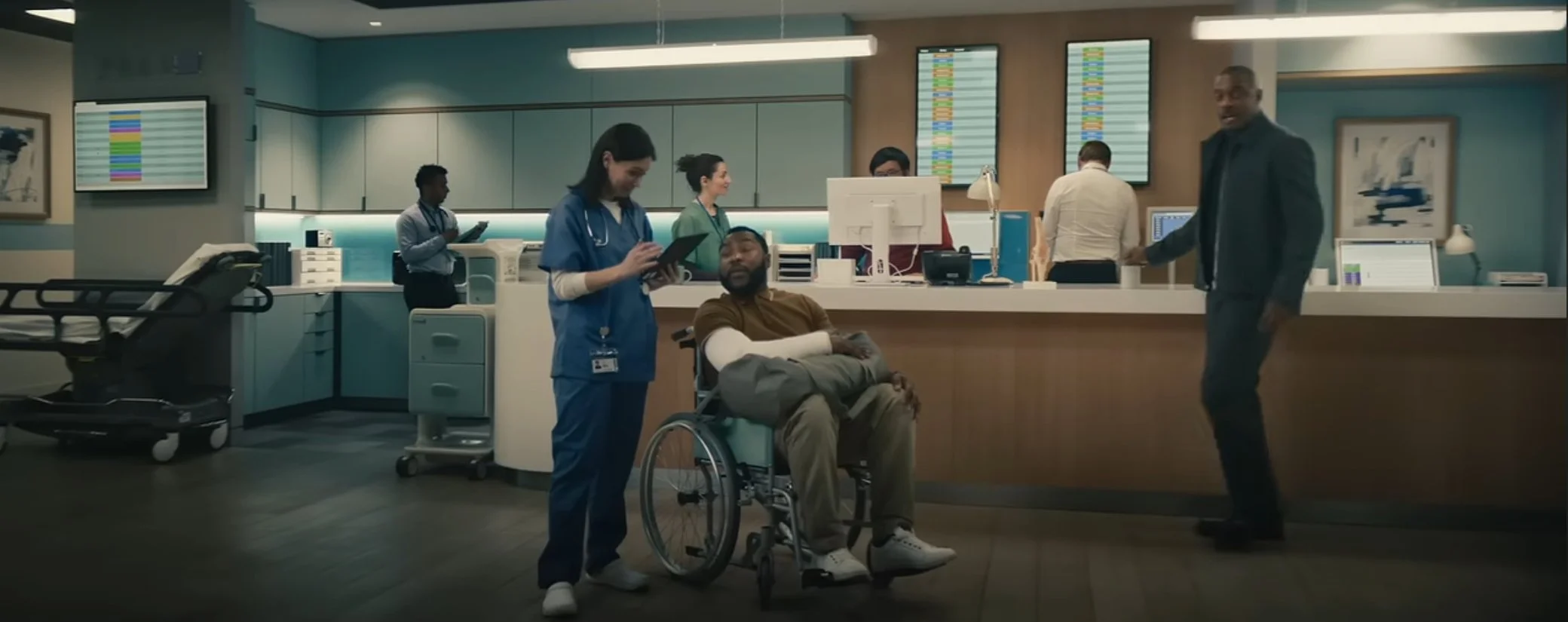
Our inspiration for the nurse’s station came from an insurance commercial with Idris Elba.
We immediately started looking for inspiration wherever we could find it. For the nurse’s station, we knew that set was going to have to be very large for it to accommodate multiple actors and to look realistic.
We came across an insurance commercial with Idris Elba with a beautiful looking nurse’s station set that we thought would be large enough for what we need, and within our capability of replicating it.
Once we decided that we would make an attempt at a similar design, we started getting to work on drawing blueprints, sourcing materials, creating lighting diagrams, and searching for a studio that could fit the sets we needed to build.
Nurse’s Station
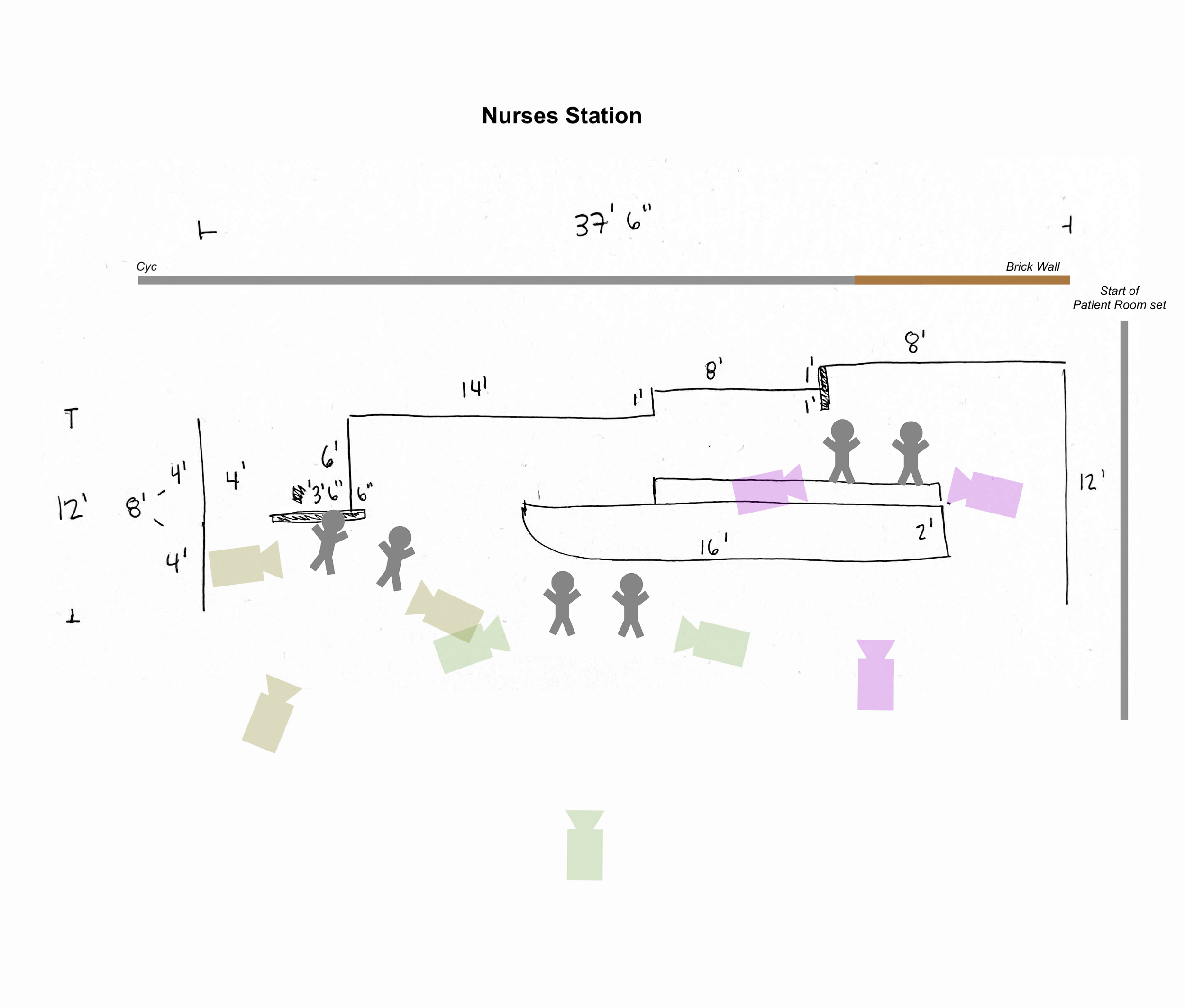
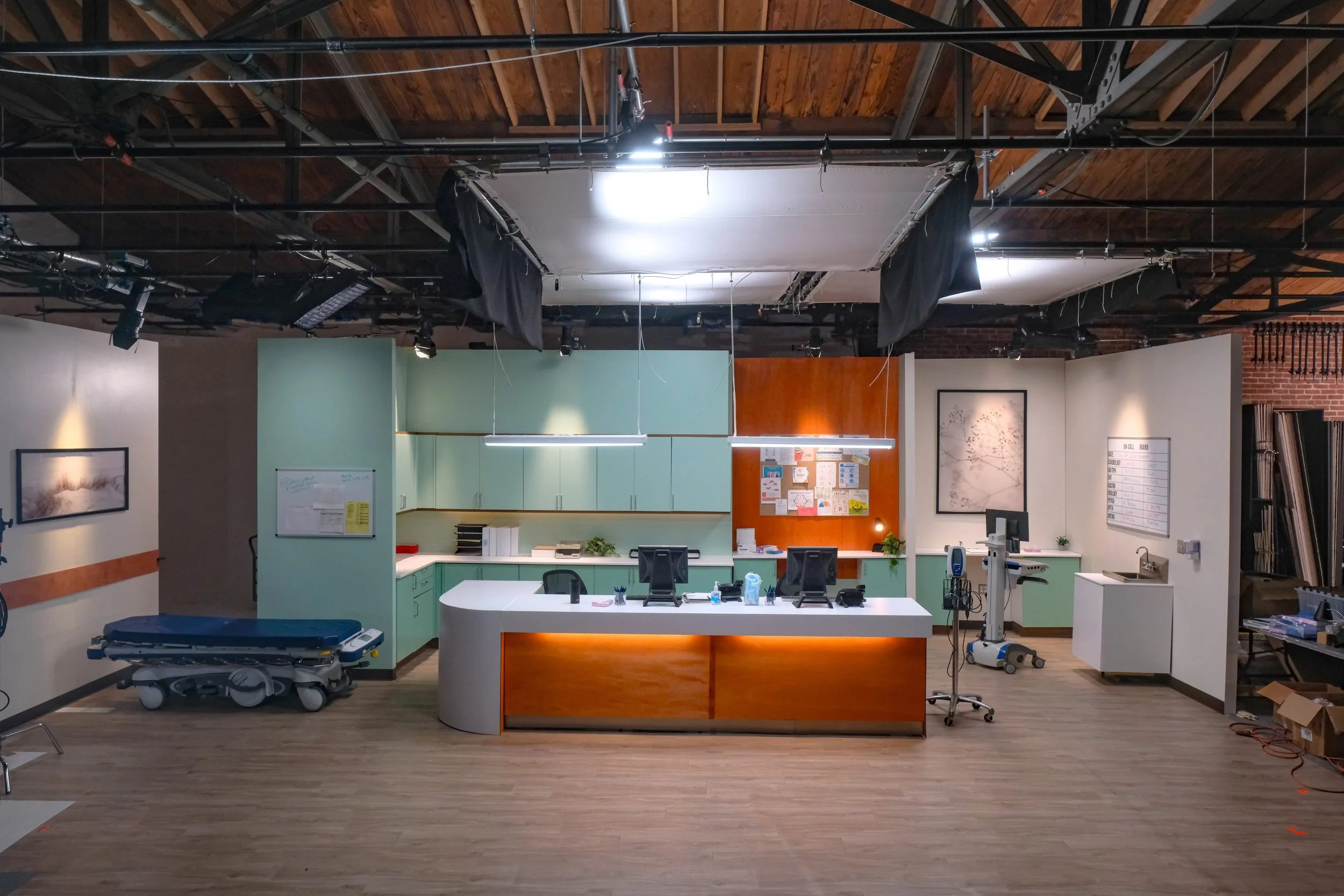
Our original drawings and blocking designs are simple but help us and our clients to visualize what it will look like when cameras, crew, and talent occupy the sets.
Inpatient Room
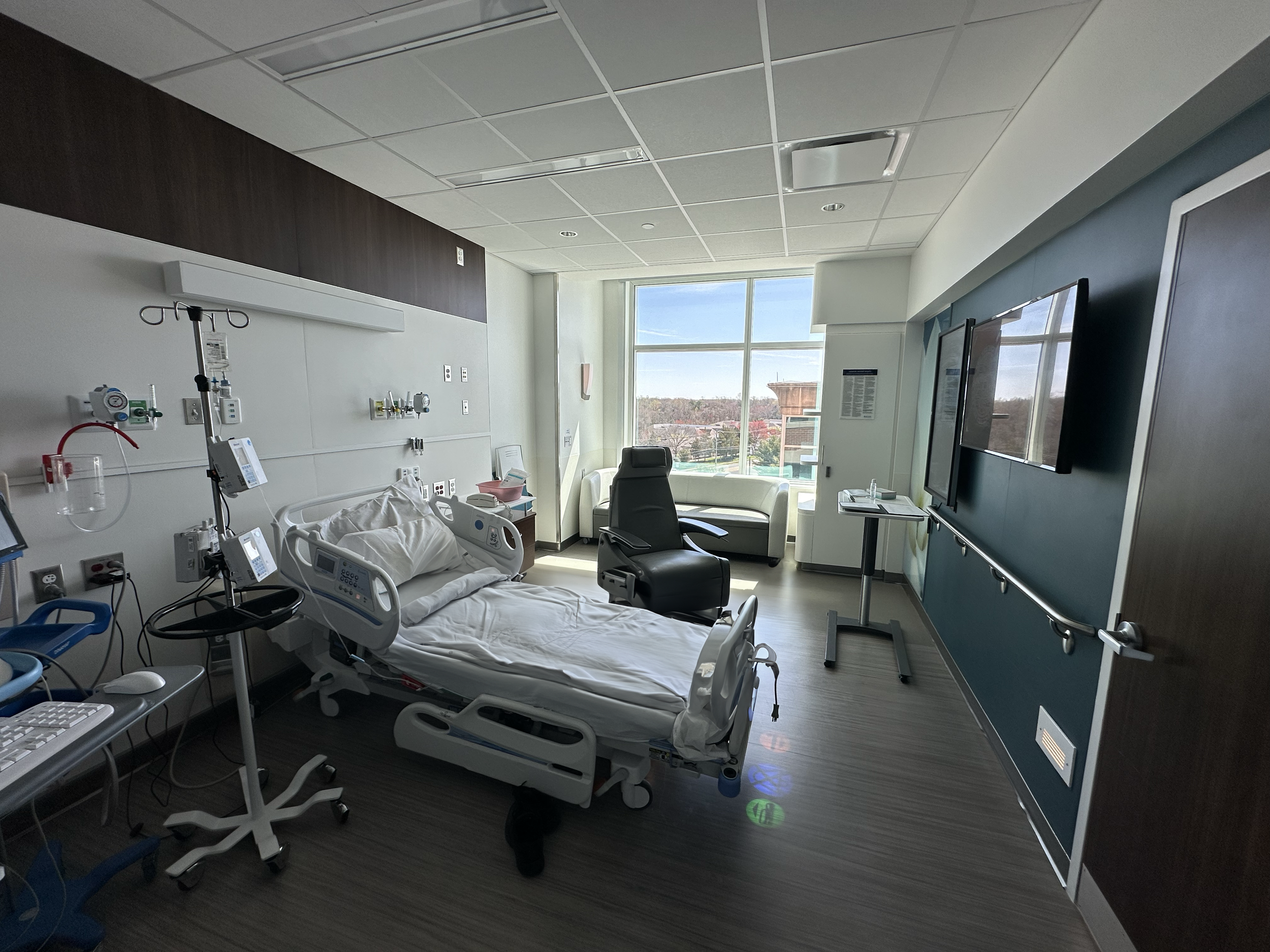
Because we do extensive work in healthcare video production, our teams are very well versed in what inpatient rooms in hospitals and health systems look like.
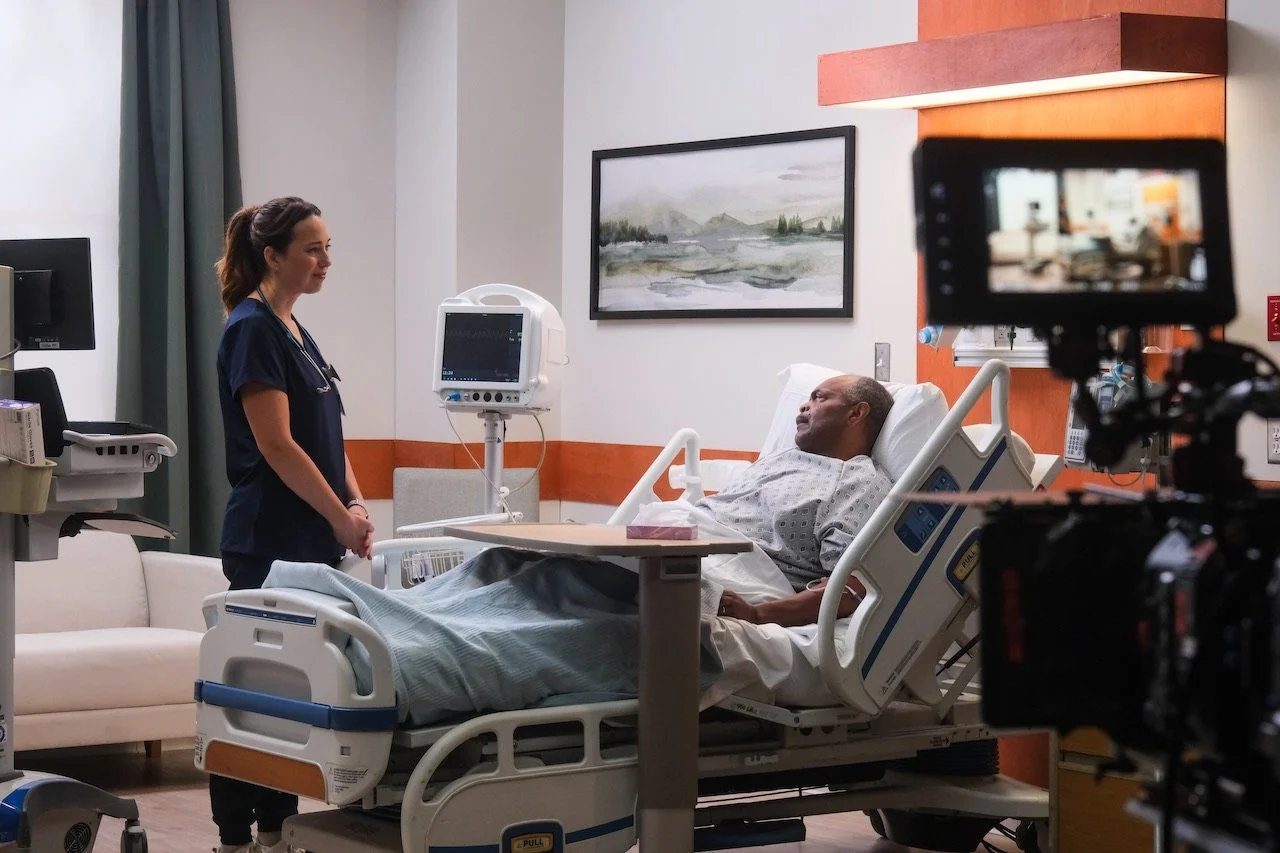
We used our experience working in those spaces to find an example of a modern, well equipped, private inpatient room that we could use to model our hospital room from.
We also wanted to design a space that could be modular so that we could make a couple of minor changes, like adding a track and a curtain and bringing in different furniture, to create a unique emergency room space without having to build an entirely dedicated set for those scenes.
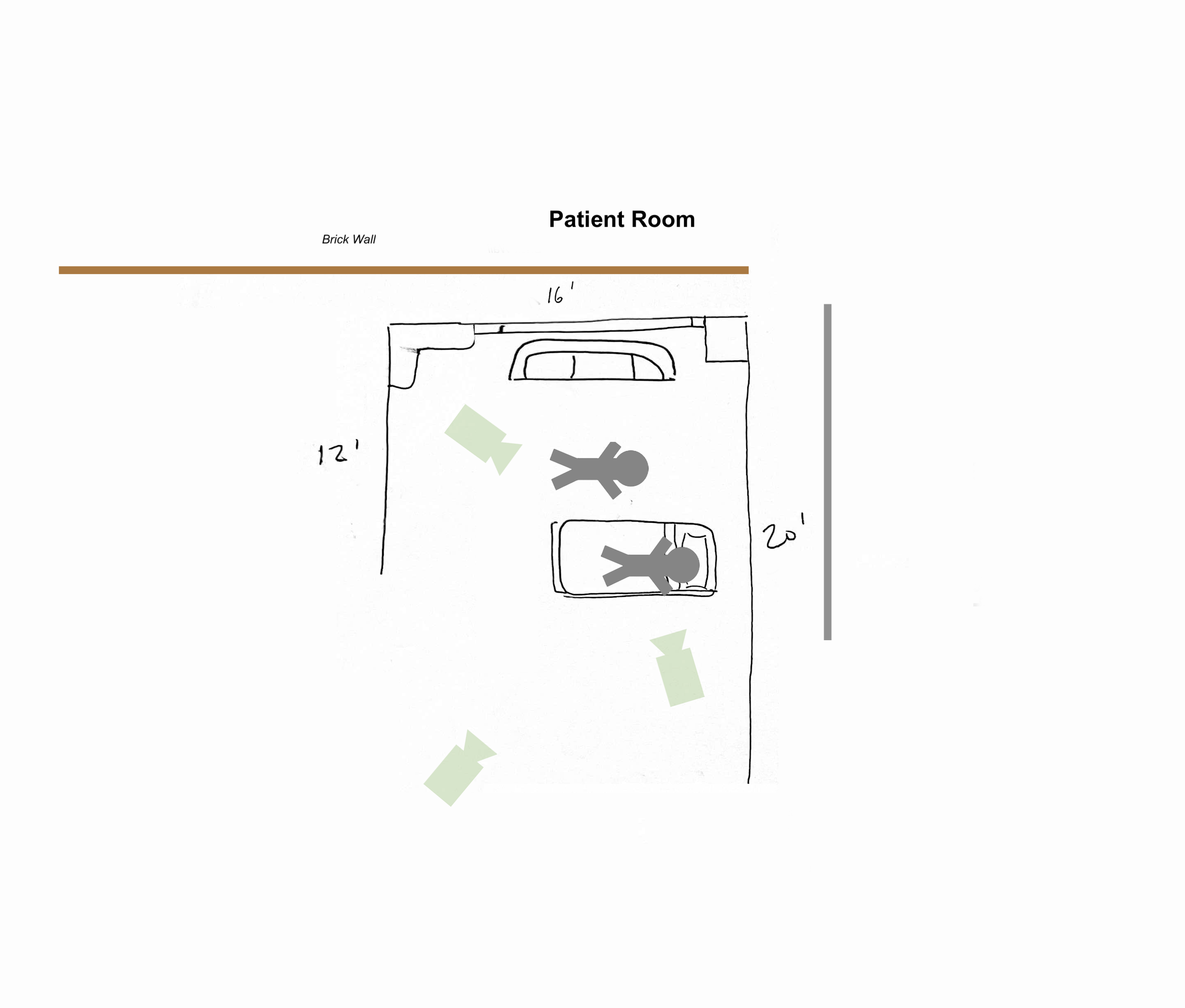
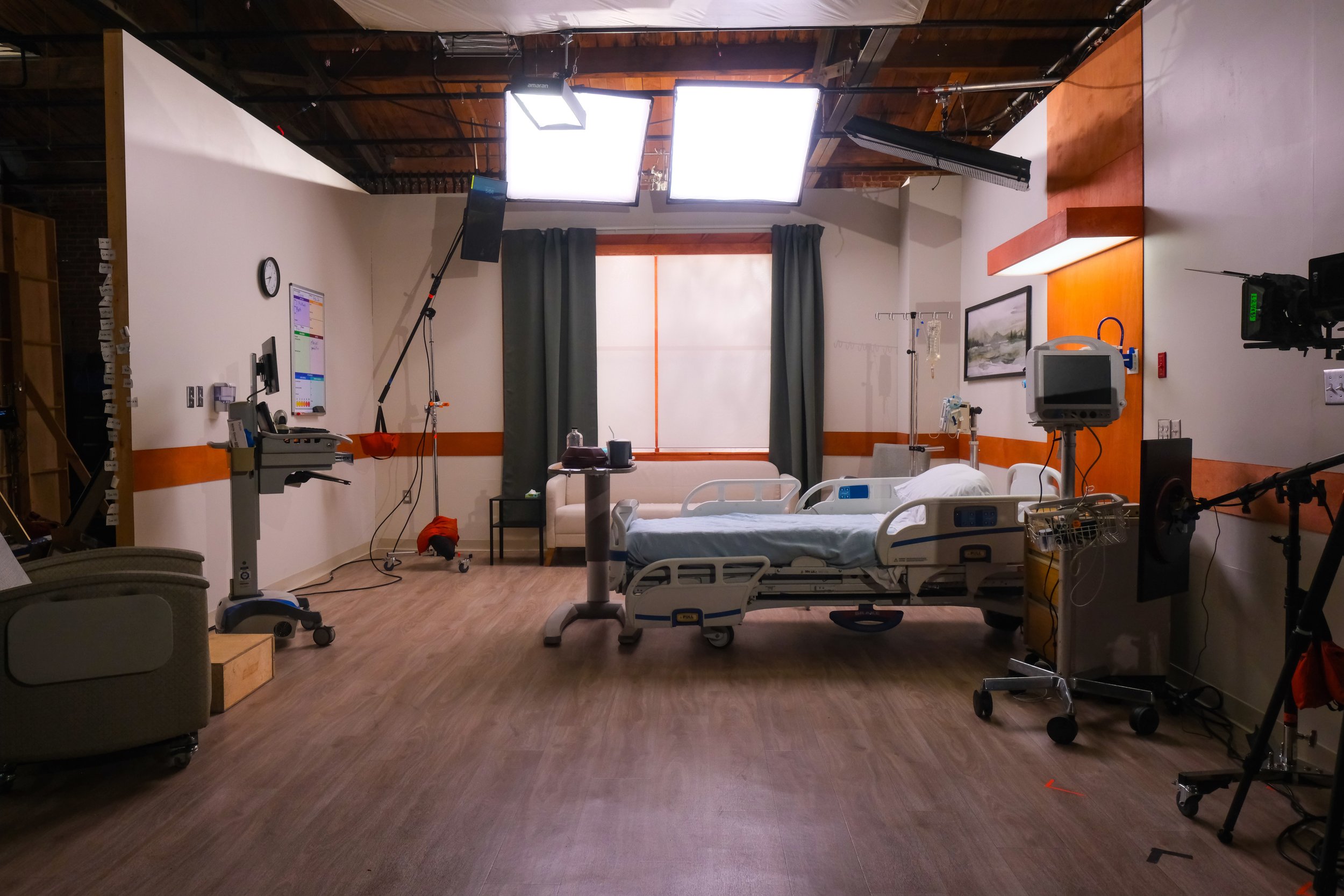
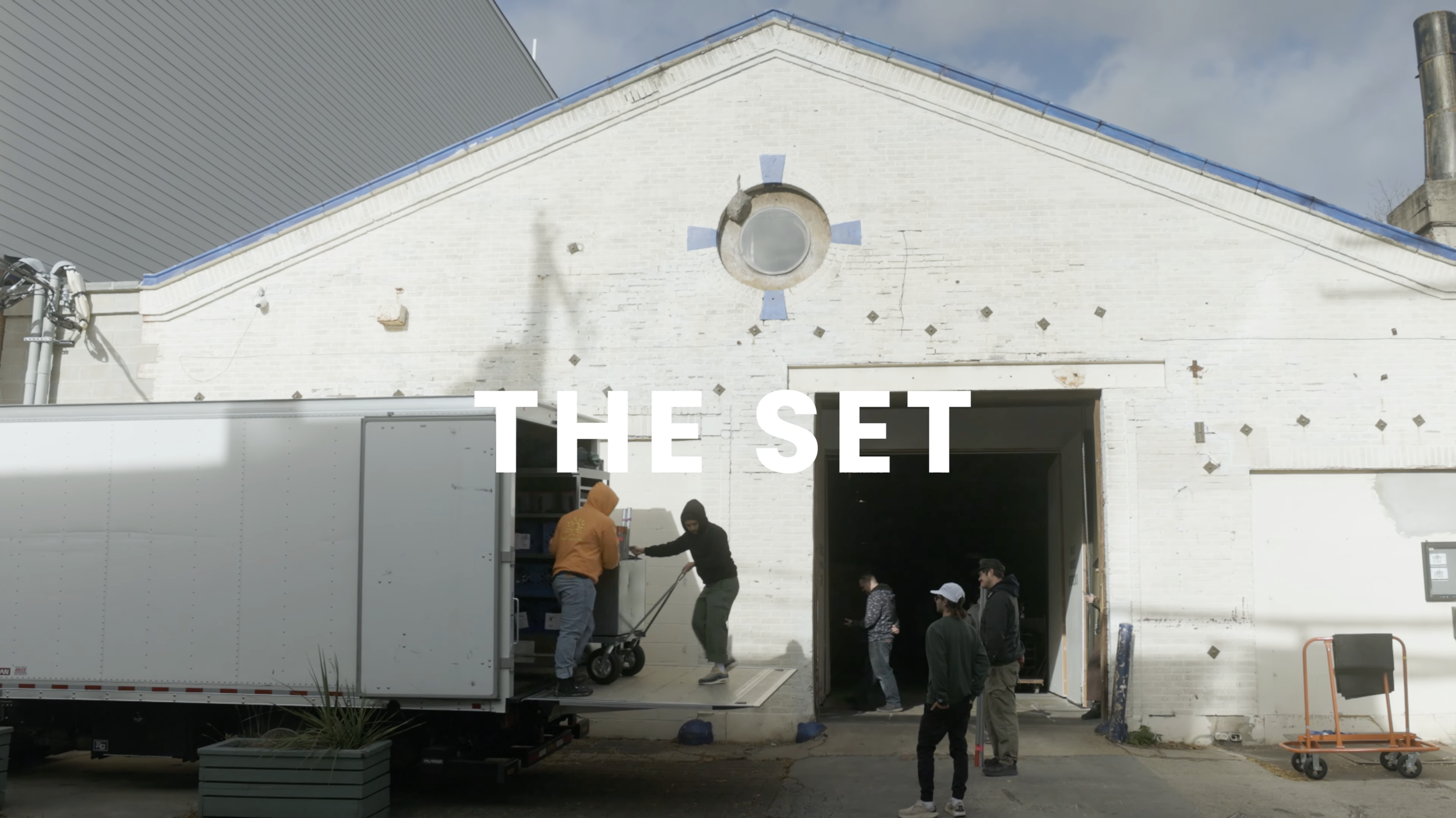
Behind the Scenes: The Set
The Approach - Content & Casting
The next step in the process was to start learning the content and thinking through casting dozens of actors who could accurately portray these roles of nurses and patients.
Our team of producers worked together to read all of the script materials aloud, which ensured we learned the material thoroughly. Along the way, we made notes for specific props that were needed in each simulation. And we were timing how long it took for us to table read the scripts, which would inform how we could build out the production schedule for each day.
Ultimately, what was most important in this project was accuracy. That meant we needed to cast actors that fit very specific criteria, like heights and weights, ages, cultural backgrounds and more. We sifted through hundreds of auditions to select the nearly 100 actors we would use across the two years of production. It was a true achievement in logistics and project management.
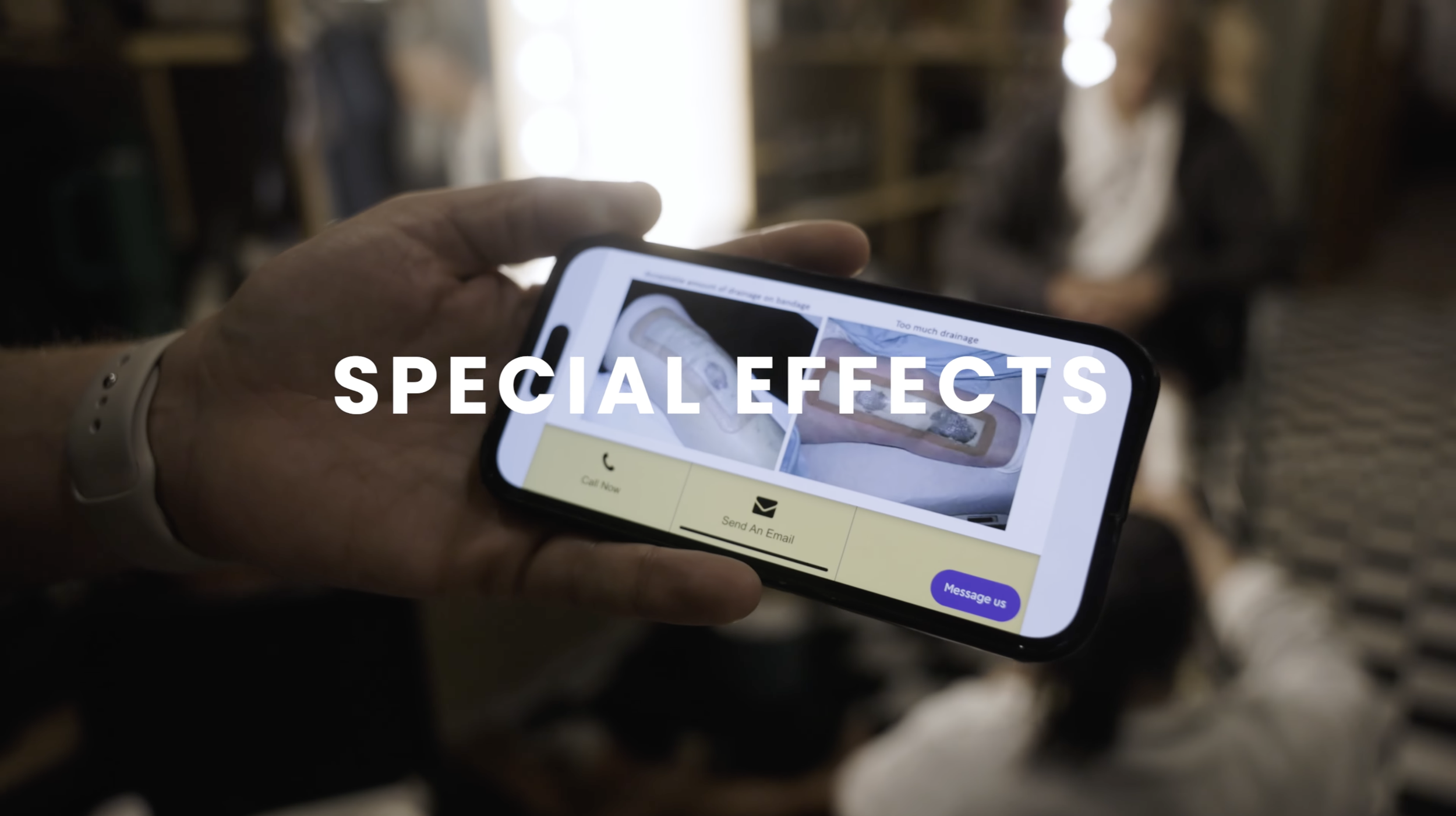
Next, we worked with our longtime makeup artist, Sara Mann from Elegance Artistry, to develop and create special effects makeup and dressings for the scenarios in which you needed to see our actors bruised, with prosthetic limbs on, or hooked up to medical equipment.
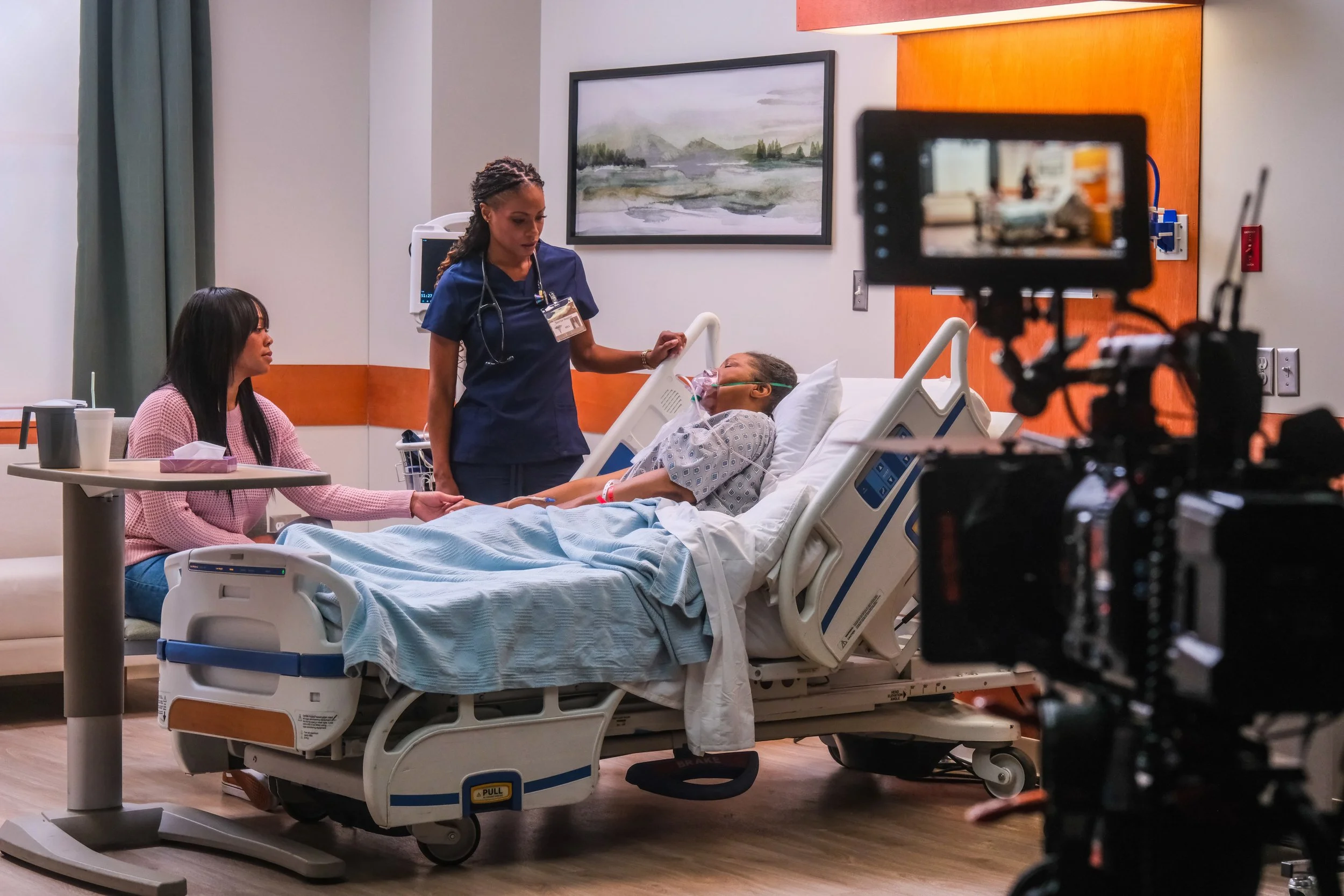
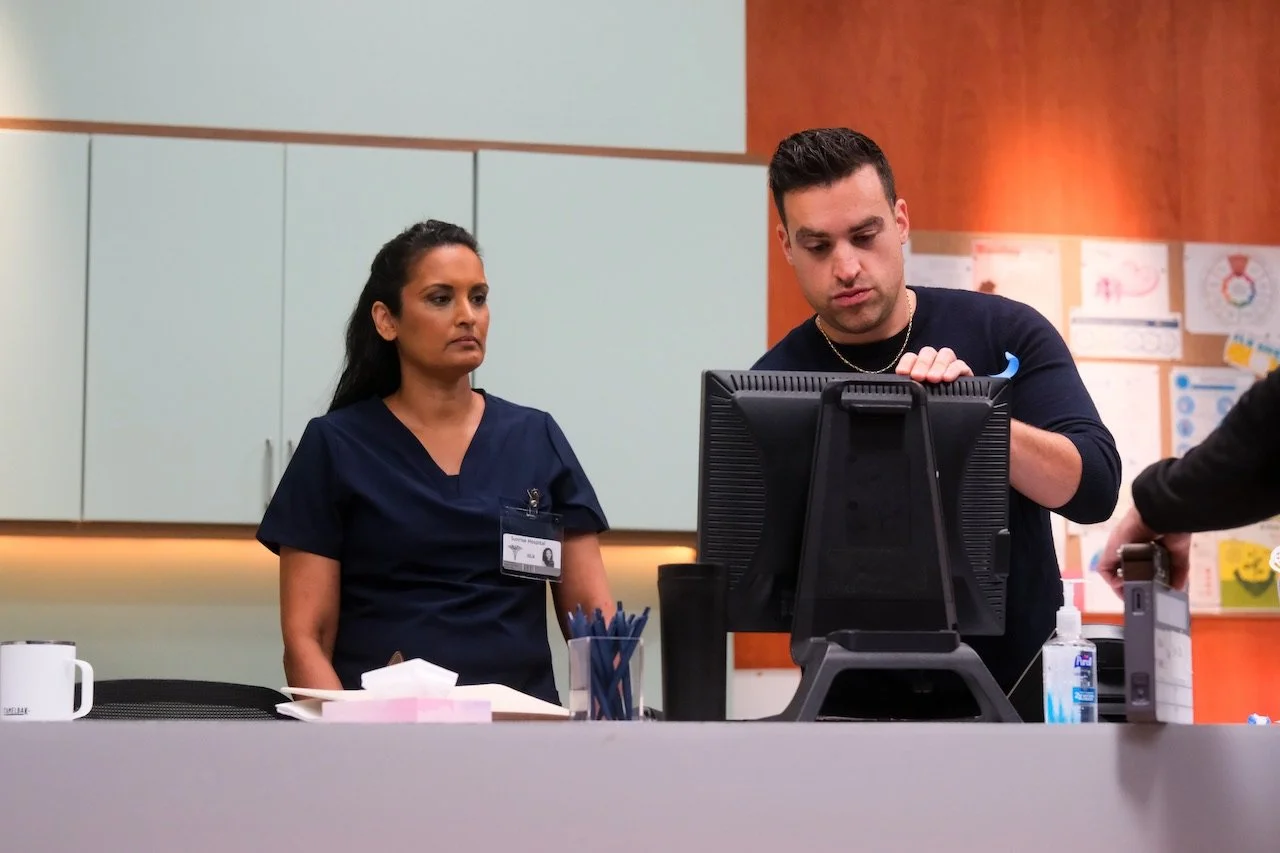
Behind the Scenes: Special Effects
The Approach - The Shoot
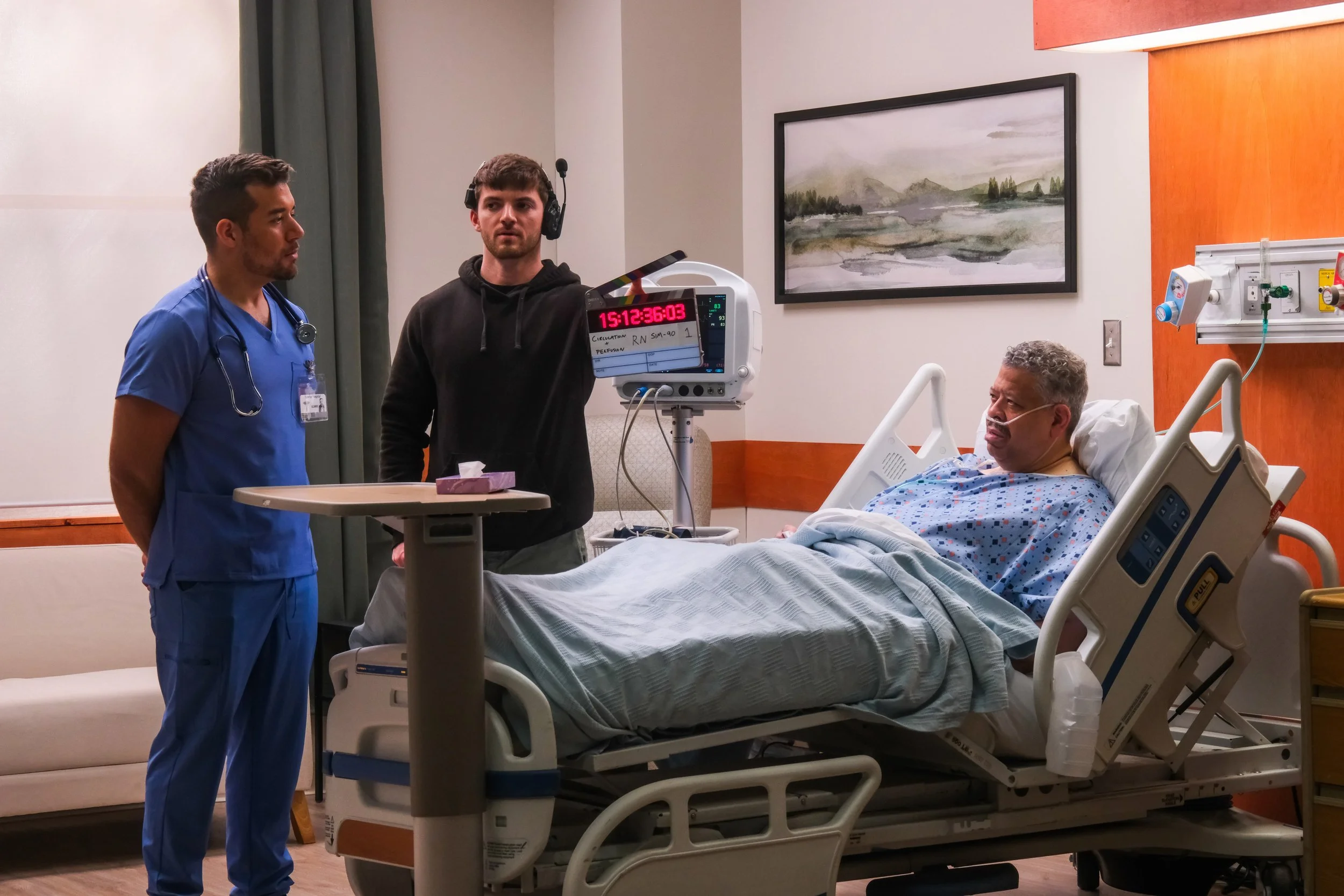
With the set designed, a location secured, and the actors cast, what was left was to source a crew, build the set in-studio, bring in our medically accurate props from a specialty prop house in New York, and start filming.
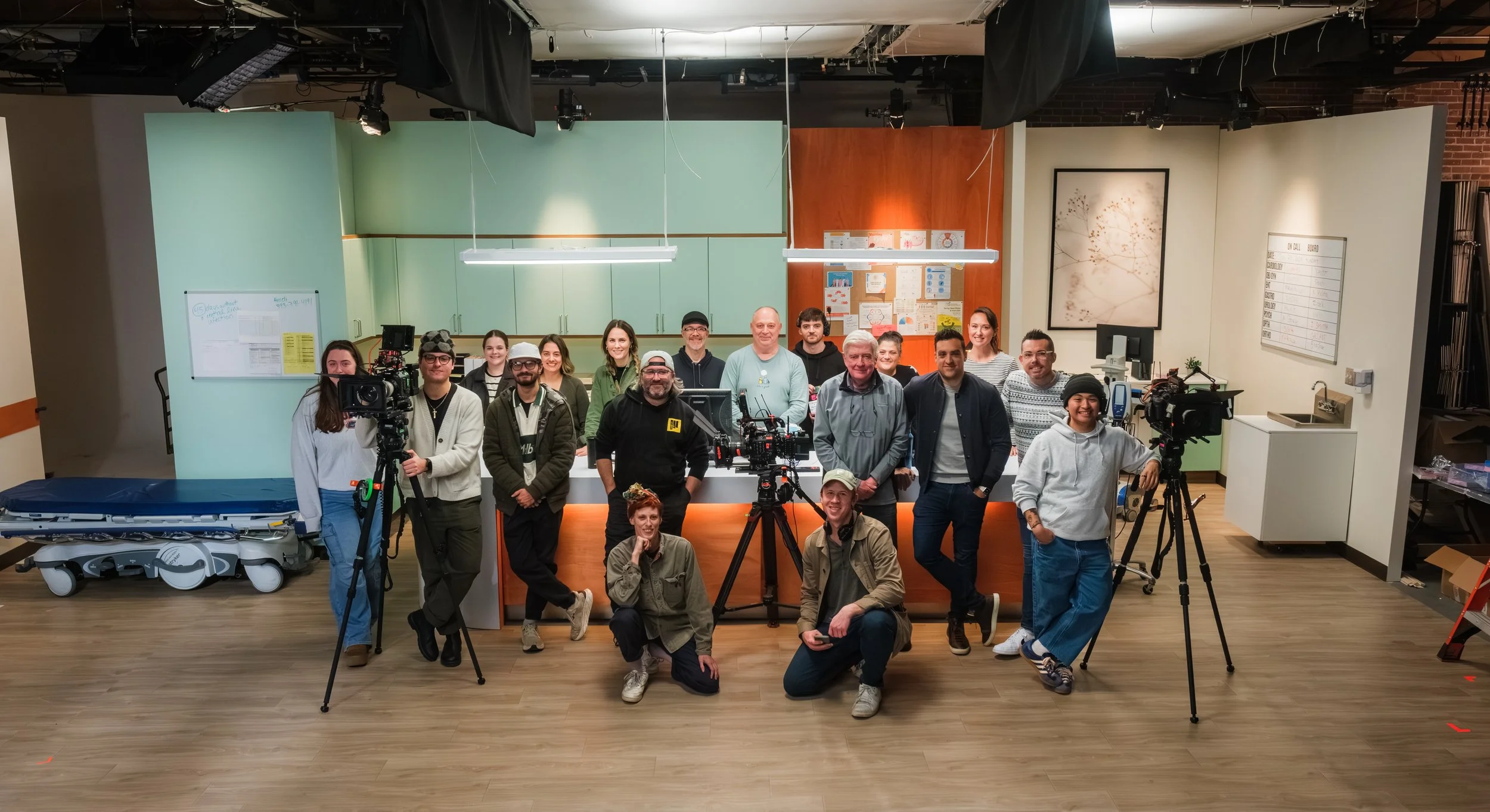
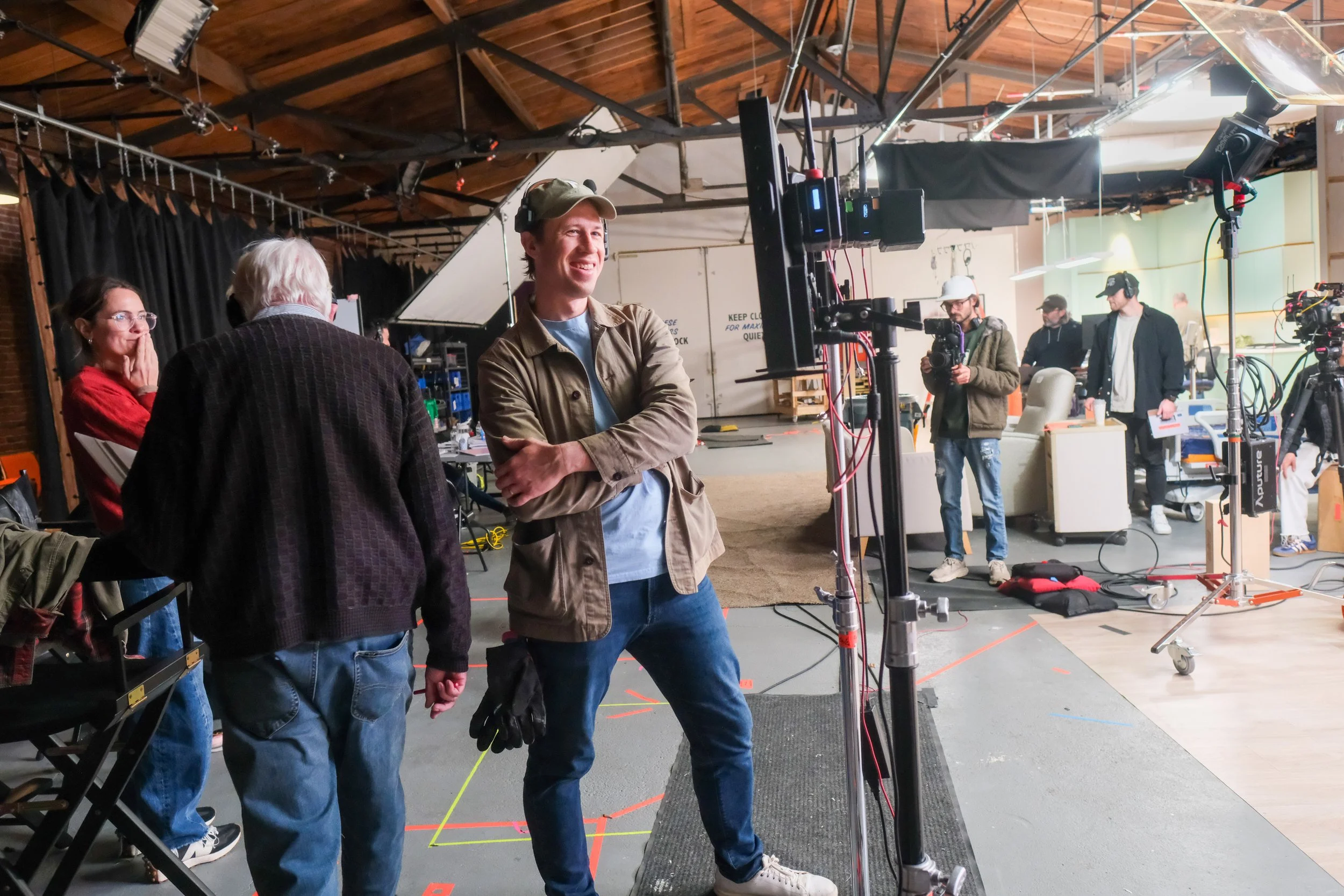
We put together an exceptional crew comprised of our entire in-house 20/20 team, supplemented with our roster of trusted, longtime freelance support in a variety of departments.
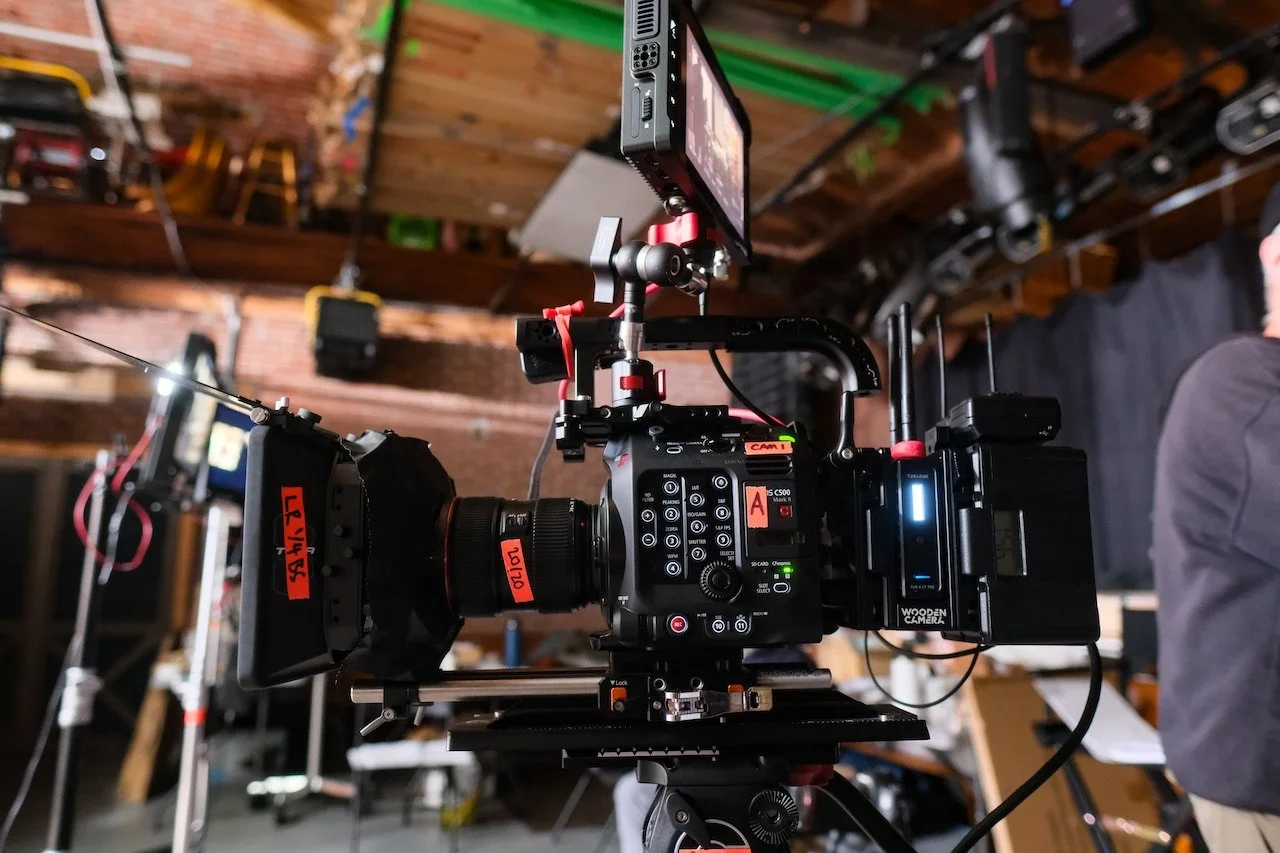
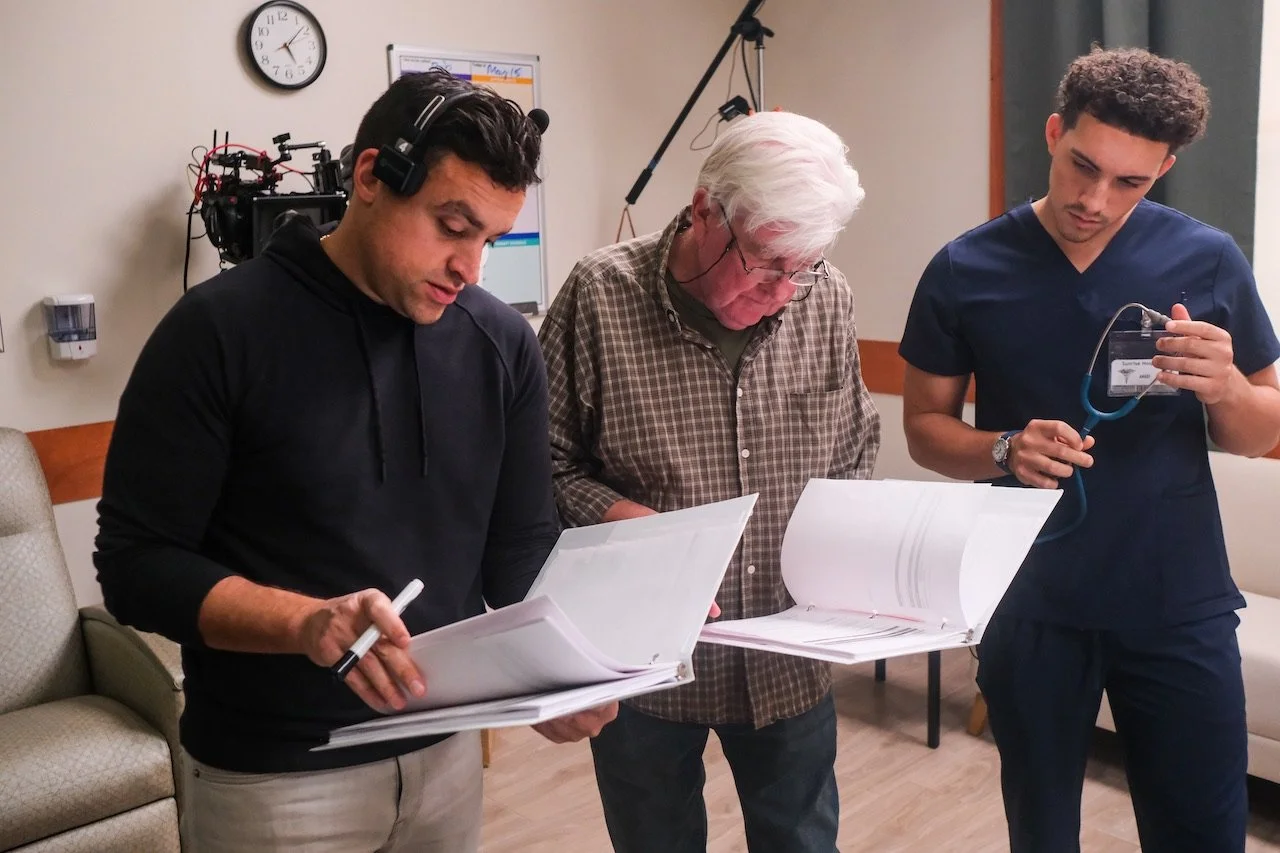
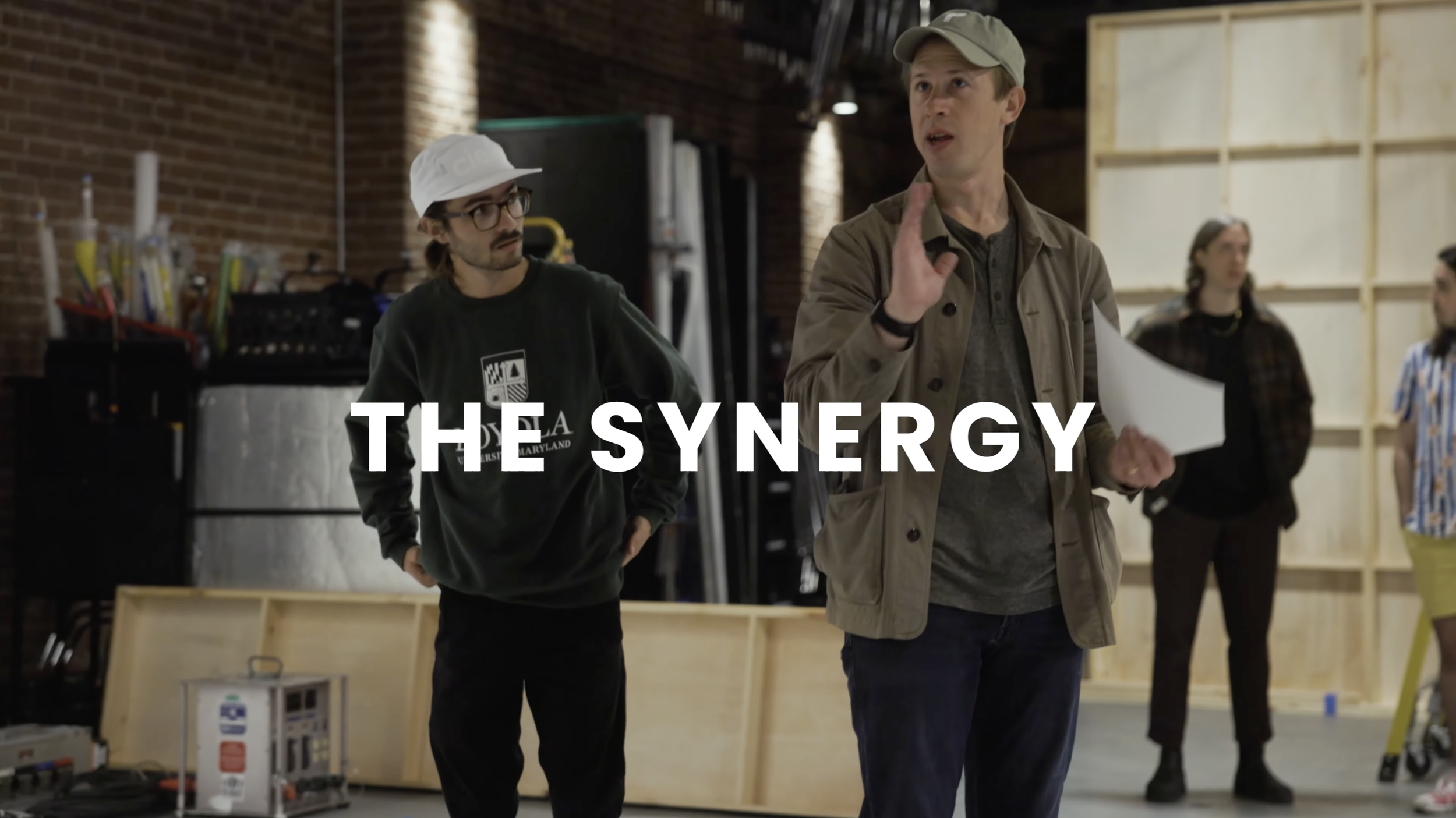
For a shoot of this size, we needed a crew of 20+ people that spanned a construction team, the camera department, grip and electric, sound, art direction, producers, a director, data management, and a team of professional nurses that served as our on-set subject matter experts to ensure accuracy.
Behind the Scenes: The Synergy
The Results
Following production, our editing team led by Bridget McHugh managed the extensive, months-long post-production process.
Not only was medical accuracy at the top of her mind, technical accuracy was too. Aside from the supervision of hundreds of pages of dialogue, one of the challenges in editing was having to hide certain elements on set that were required during filming.
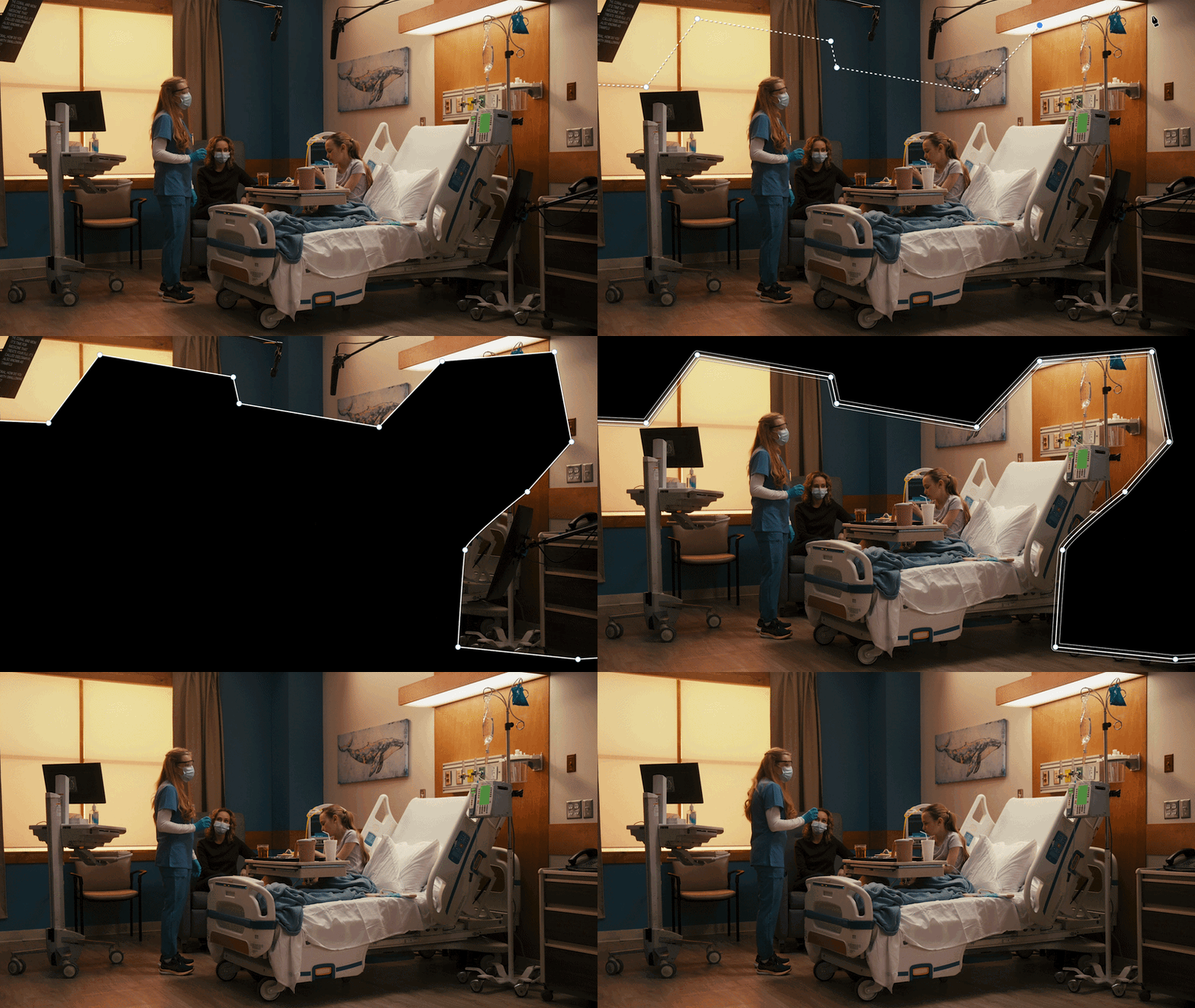
Because there were so many deliverables, we could not expect the actors to be able to memorize the lines across 20+ scenes per day. So, a teleprompter system was placed strategically on set that would allow the actors to read their lines while it appeared as though they were looking at each other. In post, Bridget was able to mask out the teleprompters from the frames so that the viewer would never know they were on set.
She also had to pay close attention to the numbers that appeared on the screens in the room, including the blood pressure and heart rate monitors, the IV pump, and any other medical prop that we used to stage the scenarios.
The ultimate result of this project was the successful delivery of 600+ accurate medical simulations that will be used to educate the next generation of nursing professionals.
Ready to author your success story?