5 Things That Happen in Pre-Production That You Never See
“Proper planning prevents poor performance.”
If you ever played sports as a kid, you may be familiar with that saying. Coaches in youth athletics often reminded us that it was what happened on the practice field that led us to any success we might have during the game.
The same is true in the video marketing world.
Successful productions don't happen if you just show up and shoot.
You might be stunned if you knew how many times we’ve been asked over the years, “We want a five minute video. Can’t you just take the camera outside and shoot for five minutes and give us the video?”
Well, I suppose we could. But the chances that a video like that would yield any type of results for you are less than zero.
Video productions that achieve results do so because of how meticulously planned they are.
By the time we start rolling camera, some of the most important work has already been finished. But the vast majority of it is work our clients never see.
The success of any video project relies heavily on the invisible details handled during pre-production.
Let’s tell you about some of them.
The Tech Scout
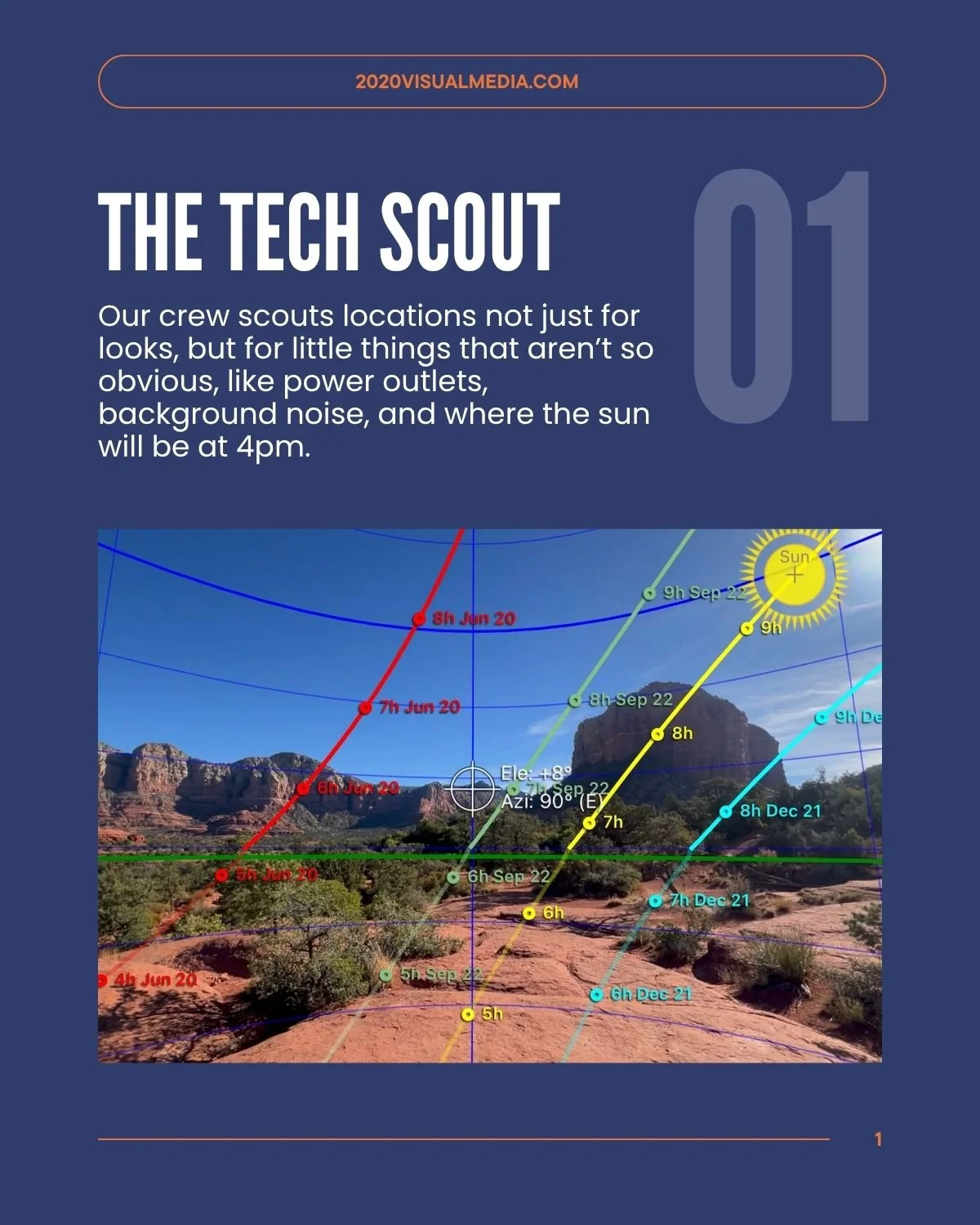
Long before we arrive on set for the big day, our team is likely to ask for a location scout. And there are many reasons to do a thorough one.
You might think that a location scout is all about choosing the right backgrounds for an interview, or making sure there are a variety of looks for the b-roll we’ll capture, but that’s only part of it.
A location scout is also important for evaluating the not-so-obvious technical needs of the production. Those components might include:
how many power outlets does the location have?
what natural background noise exists, and will it be a problem for filming?
what’s the position of the sun in the sky, and how might that affect the lighting plan?
Taking detailed notes during the location walkthrough allows our production team the time to evaluate equipment needs and make recommendations to the client.
The Gear Prep
This is probably the most time-consuming part of pre-production that our clients never see.
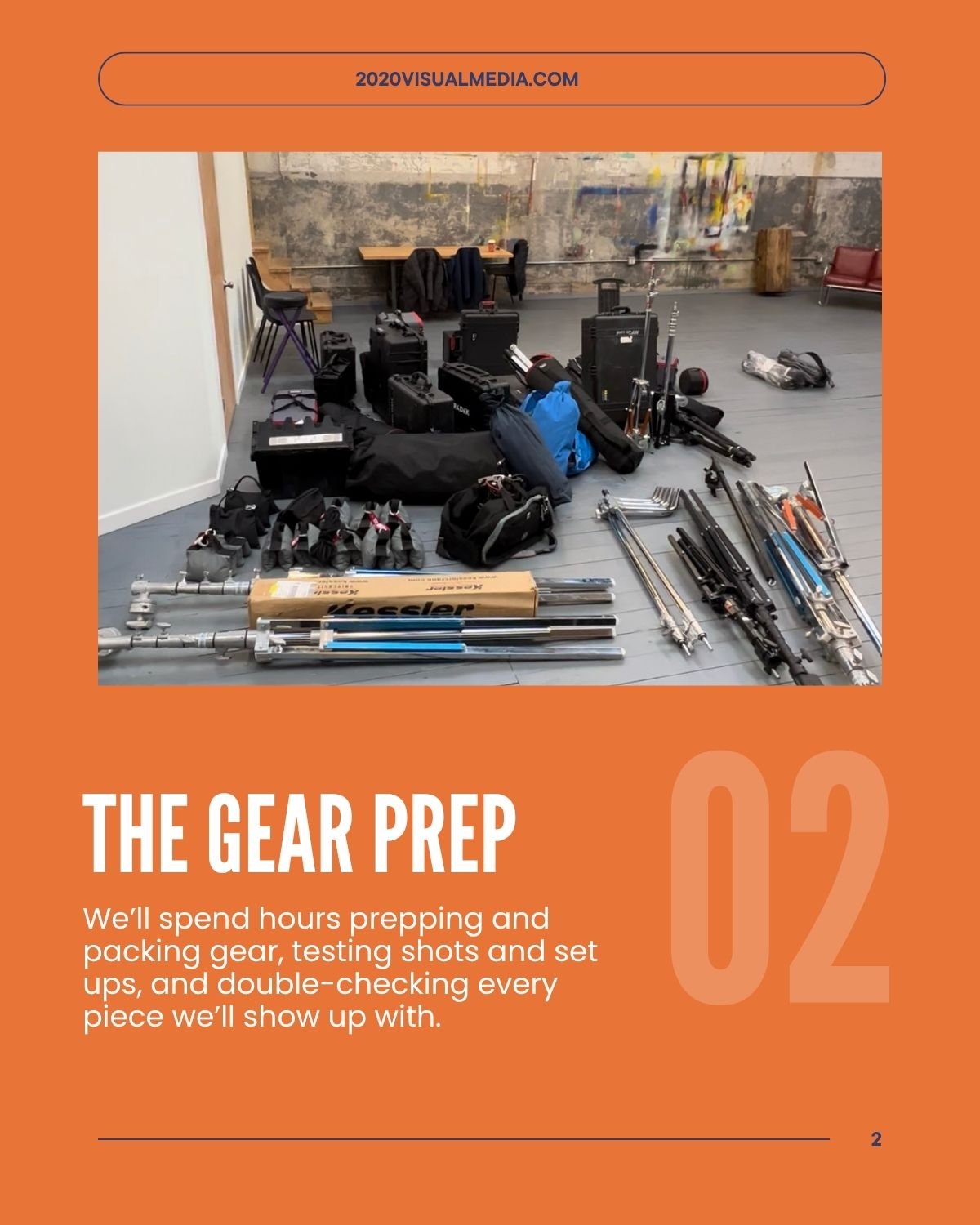
No matter what size project we’re working on, it takes hours to create a manifest of the gear required to properly execute each job.
And then you have to sort that gear, load it, and transport it.
For an 8am call time, it’s pretty likely we’re staying late the night before, or arriving as early as 5am to sort gear, prepare it for production, and get it loaded into cars to be able to make it to set on time.
For productions that require unique or difficult set-ups, we will very often turn our gear storage space into a pseudo studio days in advance, performing test shots and movements to make sure we’ll be able to replicate them successfully when it matters.
The Logistics
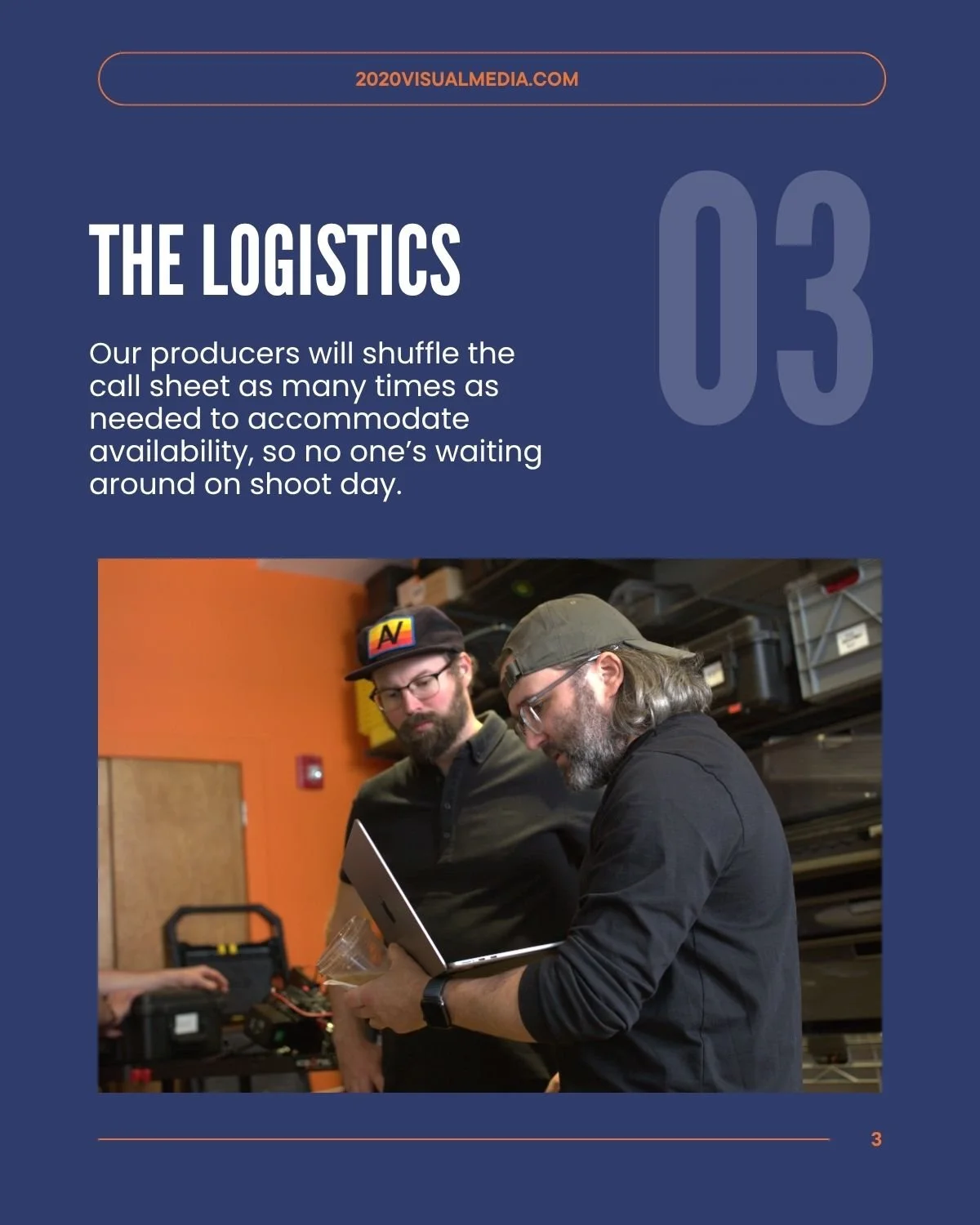
Our producers are experts in logistics. They have decades of experience dealing with the production issues that come up the most often like:
accommodating our clients’ busy schedules
acquiring filming permits from local and state municipalities
sourcing locations, talent, and specialty crew
By the time we arrive on set, our goal is to have a schedule so buttoned-up that we can move from one shot to the next as quickly and seamlessly as possible.
We also work with a lot of VIPs. Whether it’s a company’s CEO, a doctor or surgeon, a celebrity, an athlete, or another person whose availability is limited, we know it’s important to create a schedule that values and protects their time while allowing us to capture the content needed to create a successful video.
And we’re well versed in fitting a lot of elements into one or two days. Sometimes it’s six interviews. Sometimes it’s multiple locations.
Being flexible is key to being successful in video production, and having the ability to make changes on a dime comes from collecting years of experience.
The Direction on Paper
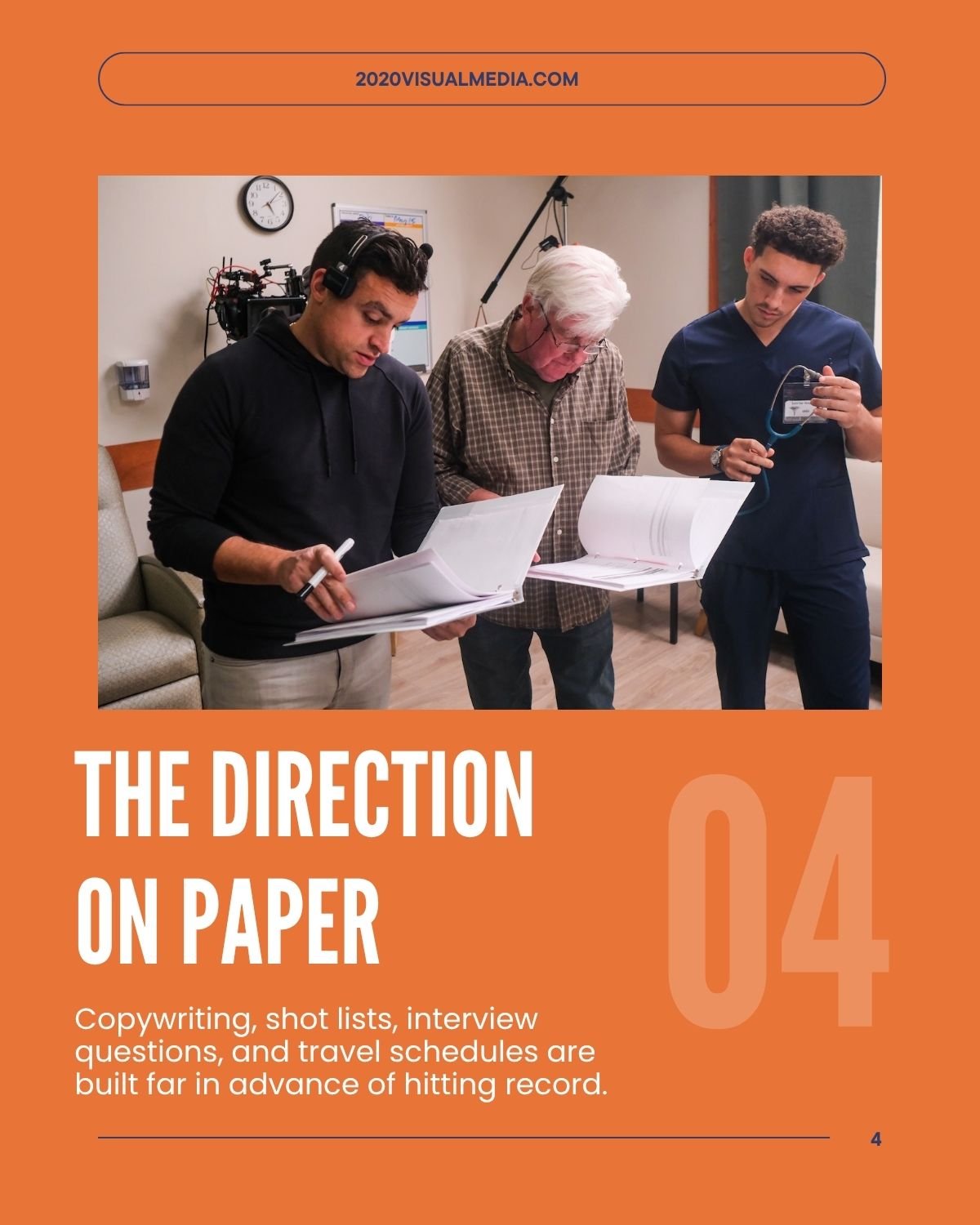
If you want your video to be successful, you’re going to want to be able to visualize the final product on paper before we ever hit record.
There are different paths to get to that “production-on-paper” outcome, depending on the type of video you’re working on.
For a scripted video, it might look like:
A fully executed script
Storyboards
An “A/V” script (think a side-by-side list of the shots that will accompany each line of the script)
For an interview based video, it might look like:
A rough outline of the direction of the video
A story arc that details how we get from A to B to C, etc.
A list of interview questions that our producers will ask the subjects of the video
Written copy points that will appear on screen as statistics, calls to action, or marketing copy for art cards
The Backup Plan
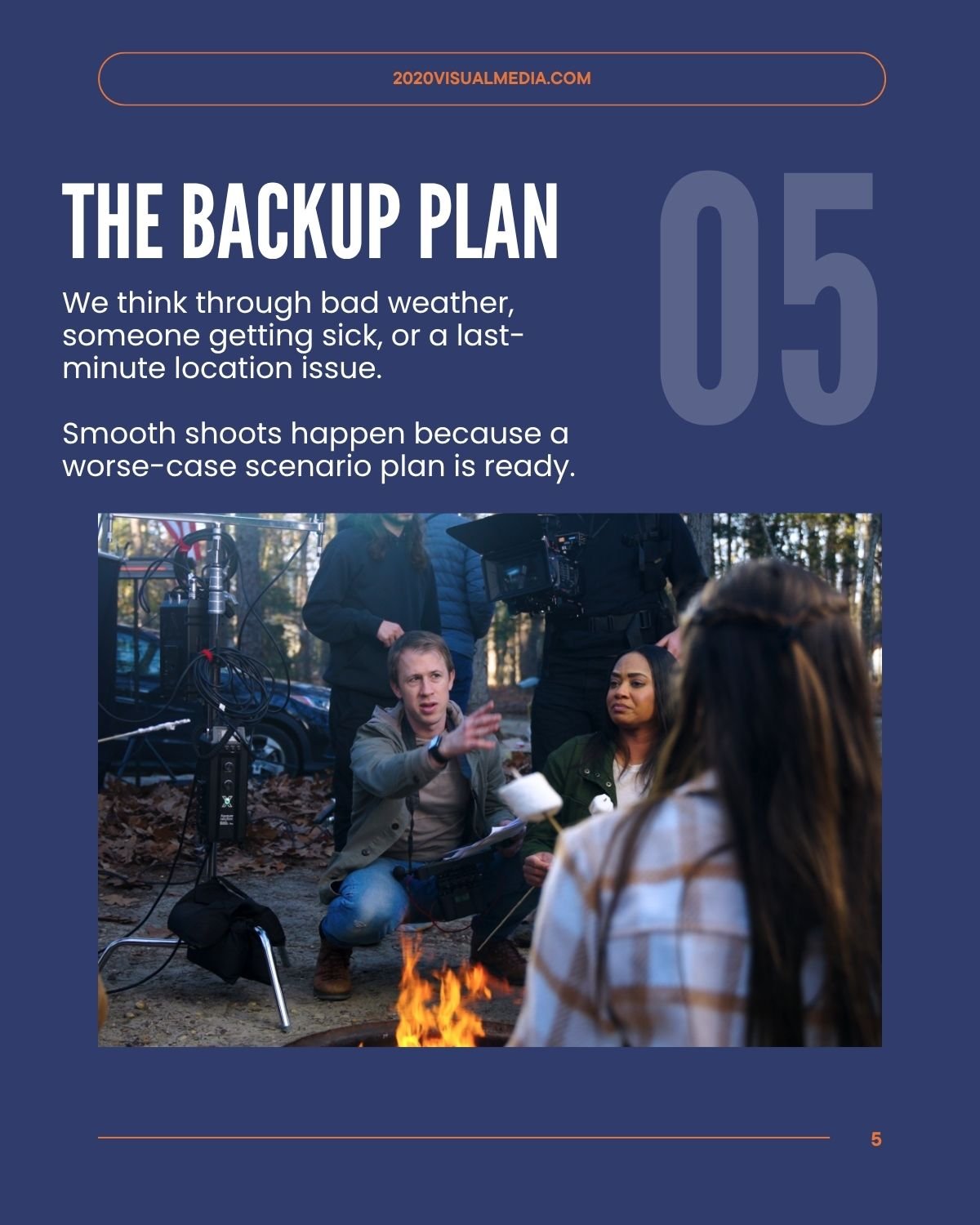
Walking into a shoot with every eventuality thought through may be the most important aspect of Pre-Production.
If you believe in Murphy’s Law (the old adage that “everything that can go wrong, will go wrong”), you know that you’ve got to be able to pivot at a moment’s notice if something doesn’t go according to plan.
No matter how much you prepare for Plan A, our team is also trained to think through every possibility should an issue arise, like:
Planning a rain date in case of bad weather
Having a roster of crew members who can fill in for a last minute illness
Bringing along extra equipment to use in the lighting, sound, or camera departments in case something breaks or stops working.
A smooth shoot happens because we’ve thought through every worse-case scenario, and always have a Plan B.